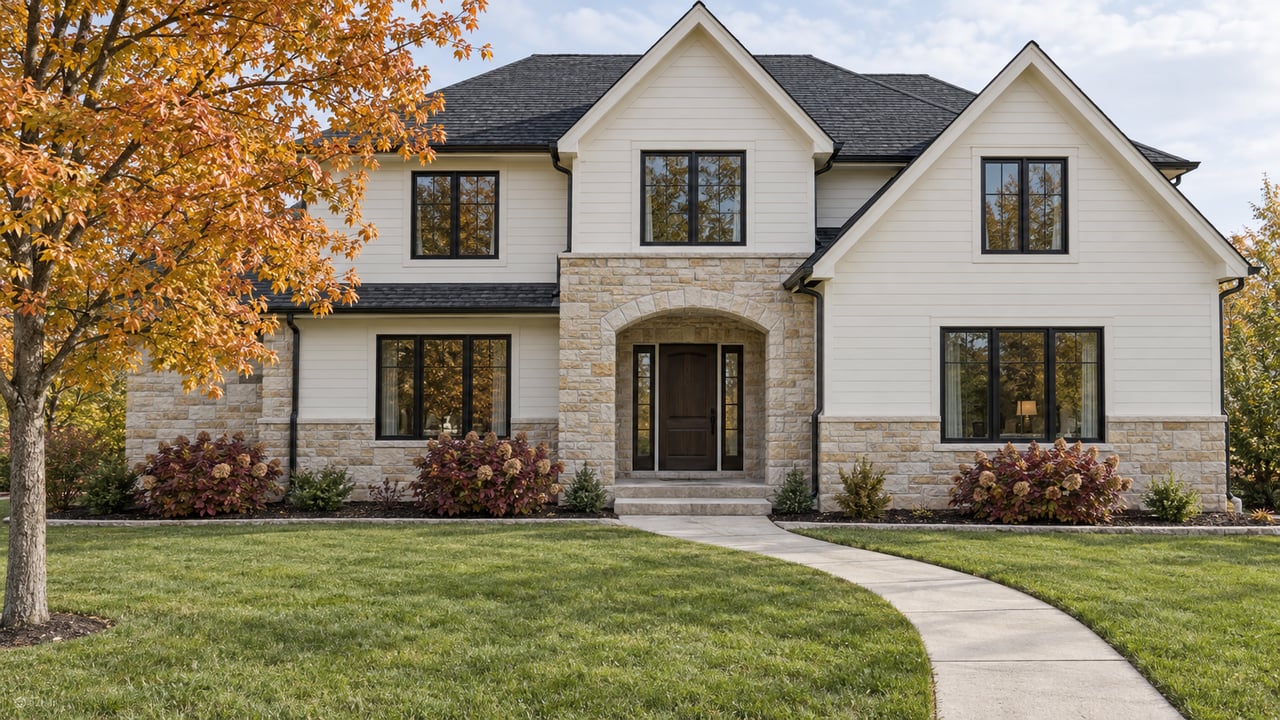
In Chesterfield, the last tax bill paid on a house can be lower than what the next owner will pay. Missouri's senior property tax credit is calculated against one owner's base year on one specific homestead. That owner has to be 62 or older and has to live in the home as a primary residence. When the house sells to a buyer who doesn't qualify, the credit doesn't come with it.
That matters more in Chesterfield than anywhere else in St. Louis County. In the program's first year, the county approved more applications from Chesterfield than from any other municipality. Two levy questions are also on the November 3, 2026 ballot, and both treat frozen owners differently from everyone else. So the gap between a seller's bill and a buyer's bill could widen.
The credit sits on the tax statement for a reason
Under RSMo 137.1050, the credit is the taxpayer's real property tax on "such homestead" for the current year minus the tax on that same homestead in the taxpayer's initial credit year. For owners who already qualified when the county adopted the program, the initial credit year is the year it was authorized. For everyone else, it's the year they first qualified. The statute also requires the credit amount to be printed on the owner's statement of tax due.
That printed line matters most during due diligence. The total on a seller's statement already has the credit taken off, so a buyer estimating carrying costs from that total may be using a number that applies only to the seller. The figure closer to a new owner's experience is the bill before the credit.
St. Louis County describes the credit as relief from increases levied by all taxing districts except the Blind Pension Fund. The county uses base year 2025 as its example for the 2026 bill. An owner who enrolled early has avoided every school, fire and county increase since then. The longer the freeze has run, the further that owner's bill has drifted from what an unfrozen neighbor pays.
Why so many Chesterfield bills carry the credit
St. Louis County reported 70,519 approved applications and $30 million in senior savings in the program's first year. Chesterfield had 5,495 of those approvals, and Wildwood was second with 3,265. Chesterfield is one of the county's larger municipalities, so the total partly reflects its size. For a buyer touring homes there, it still means the chance of meeting a frozen bill on a resale is real.
A second local fact makes the credit loom larger. Chesterfield's adopted 2026 budget says the city has no property tax and gets no property tax revenue. A Chesterfield owner's real estate bill is made up of school district, fire district and county levies, which are the same levies the freeze covers. Which ones appear on a particular bill depends on the districts the parcel sits in.
Where the uncollected money shows up
The freeze moves the cost of levy growth onto owners who aren't frozen. In its 2025 rate announcement, the Rockwood School District said the freeze didn't lower its assessed valuation or change how its levy was calculated, but it did lower the collection rate the district uses to estimate revenue. Rockwood's tax rate FAQ says the district has historically collected 97% of taxes levied and expects that to drop to at least 93% because of the freeze credits. The county projected that Rockwood would lose $4 million and Parkway $2.7 million in 2026, the largest losses of any school districts.
The two districts responded differently, and the November ballot reflects that.
| Item | What it does | Frozen owners | Owners without the credit |
|---|---|---|---|
| Rockwood 2026 rate, set Sept. 29, 2026 | $3.8920 per $100, up from $3.8816 in 2025 | Covered by the freeze | Pay the new rate |
| Parkway Prop P, Nov. 3, 2026 | Raises the residential operating levy from $2.6736 to an estimated $3.1336 per $100, based on 2025 rates | Parkway says their taxes would stay frozen | About $350 a year more on a $400,000 home |
| County Prop S, Nov. 2026 | Adds 5 cents per $100 for a Senior Citizen Service Fund | Pay the higher rate on the lower, frozen value, per STLPR | About $19 a year on a $200,000 home |
| 2027 reassessment | Revalues all real estate as of Jan. 1 | Base-year bill still applies | New value feeds next bill |
Rockwood described 2026 as a non-reassessment year, with assessed valuation of $6 billion, up less than 1% from 2025. Parkway's Prop P page ties its request to two limits. One is the Hancock Amendment, which forces rate rollbacks when assessed values rise faster than inflation. The other is the senior freeze, which the district projects will cost about $30 million in revenue growth over the next decade. Parkway also cites a projected $75 million shortfall over 10 years and $15.4 million in spending cuts over the past two years. FOX 2 reported that the board voted in August to put the measure on the ballot. Parkway says the vote was unanimous.
Prop P's ballot language applies the higher ceiling according to the 2027 assessment. Prop S would start collecting in 2027, according to St. Louis Public Radio. Real estate is reassessed every odd-numbered year at its value as of January 1, which puts the next reassessment in 2027 as well. Someone buying in Chesterfield this fall could see a new levy, a new valuation and the loss of a seller's credit all reach the same tax year. A frozen seller's statement shows little of that. The base stays fixed through the reassessment, Parkway says Prop P wouldn't touch frozen bills, and Prop S would apply only to the lower, frozen value.
Questions the county has not answered yet
The program is two years old, and several practical points are still unsettled. These affect downsizers in particular, since many are moving from one St. Louis County home to another.
- What happens to the base after a move. The statute measures the credit against the tax on "such homestead," and the county's FAQ defines the base year as the first year a qualified senior applied and was approved. Neither one says whether a new home in the county keeps the old base or starts a new one.
- Annual reapplication. KSDK reported that the County Council unanimously passed a bill from Councilmen Dennis Hancock and Mark Harder. Under it, taxpayers eligible as of January 1, 2026 would stay eligible each year, but would need to update their application if they move to a different primary residence. KSDK said the bill was headed to County Executive Sam Page for signature. Its final status hadn't been confirmed when this was written.
- What the freeze covers. FOX 2 reported in July 2025 on a class action arguing that the county's early version of the program left out parts of the tax bill. At that time the county's posted terms covered only general operating taxes. The county's current FAQ says all taxing districts except the Blind Pension Fund are covered. No ruling in the case has been reported.
- Second-year enrollment. The 2026 application window closed June 30, 2026. The county hasn't published second-cycle totals for Chesterfield or countywide.
For a Chesterfield owner thinking about downsizing within the county, the first item is the one that matters. The value of a long-running freeze depends partly on whether it moves with the owner, and the county's published guidance doesn't say. The St. Louis County Revenue Department administers the program, and the county has posted freeze data by ZIP code, school district, fire district and municipality on its Open Data portal.
Common Questions
Does a buyer who is 62 or older automatically keep the seller's credit? No. Eligibility depends on the taxpayer's own age, ownership and primary residence. The initial credit year for someone who qualifies after the program began is the year that person first meets the requirements. First-time applicants file by June 30 of the tax year, according to KSDK's account of the council bill.
Can a renovation change a frozen bill? Yes. The statute raises the initial-year amount to reflect the tax on new construction and improvements to the homestead. Annexation into a new taxing jurisdiction raises it the same way.
If Prop P fails, does the gap go away? No. The credit still covers increases from Rockwood's 2026 rate, any county levy changes and the 2027 reassessment. Prop P would make the gap larger for Parkway-area parcels.
This post is general information, not legal, tax or financial advice. Confirm how the credit and any new levies apply to a specific property with the St. Louis County Revenue Department or your tax advisor.
If you're weighing a Chesterfield purchase or a downsizing move this fall, Aimee Simpson can request the full tax statement early, separate a seller's credit from the bill before it, and fold that figure into a private consultation before you make an offer. Work With Aimee.